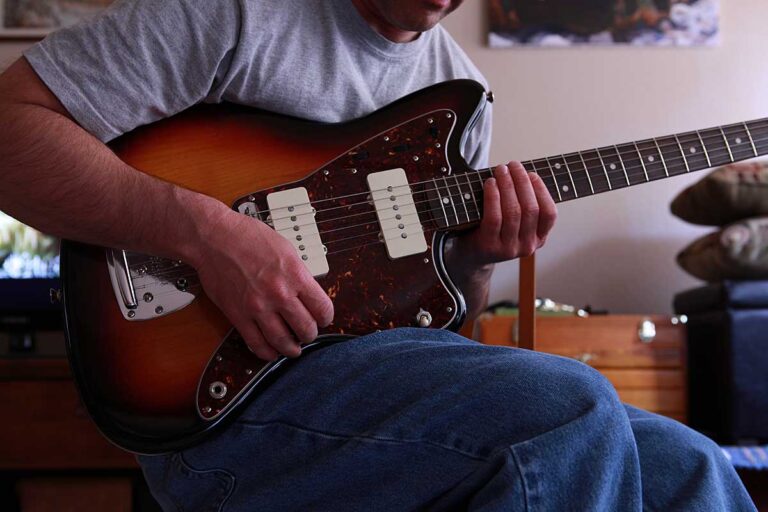
Learning the guitar can seem daunting, but it’s achievable. The process requires patience and effort, not instant mastery. Your experience will depend on factors such as:
- At what age did you first realize an interest in learning to play the guitar?
- How much time do you have to spend learning how to play the guitar?
- How persistent are you when it comes to learning new things?
First off, you are never too old to learn how to… to do “anything,” really. I mean, I guess I wouldn’t really want to learn how to become a better soccer (football) player at fifty years old; learning the guitar doesn’t come with the same risks overall. The only reason I stated that in the beginning is because (from my experience) it seems we stay more fascinated with tasks such as this when we are younger. We also do not seem to be frustrated as much when we are not learning something at a faster rate.
I remember back in my late teens, when I started learning to play the guitar, that I didn’t realize some of the notes I improvised while attempting a lead didn’t really fit into a particular scale. They just sounded good (to me) at the time, so I continued to play certain notes and / or phrases. Later on, after learning some proper scales, I was able to adjust my playing a little. Again, the point being, I was waaaay too excited about playing to give too much credence to the fact that I wasn’t playing everything correctly.
As we get older, most of us (I think) become more critical of ourselves and others. We tend to let our mistakes and / or shortcomings get us down – hold us back from future progress…
So, if you let the “age thing” NOT stop you from learning how to play this, or any other instrument, here are a few things to look forward to (or, not look forward to)…
So much to learn, so much excitement
Although you will find that there’s sooo much to learn on the guitar (or any instrument for that matter), surprisingly, you will gain a sense of satisfaction with every new tip / trick that you learn. Whether you’ve learned a new scale, or a cool riff, or just a couple of new chords for singing around the campfire… Like anything else you learn in life, you won’t be able to contain your excitement with your progress – even the tiniest of steps makes you feel like you’re in a “new club” of sorts…
Music appreciation on a whole new level
My definition of music appreciation is that it’s the practice of listening to music while being able to detect the different elements present in that music – being able to detect the different instruments and how they fit into that piece of music – being able to discern where the emphasis is placed, etc. …
Once you’ve spent some time learning some of the basics of guitar, you won’t be able to help noticing certain elements of the guitar in the music you are listening to, whether in a friend’s car on the radio, on television, or at home in the living room. Certain chord changes, riffs, and / or notes in a guitar lead will start to jump right out at you…
A new commitment of time
The time you have to spend on learning the guitar (obviously) affects your future progress. It’s very simple: the more time you spend each day (not necessarily in one day), the more progress you will make. Most of us who are still in our “working prime” are still maintaining our day jobs, tending to our families, etc. There might not be a great deal of extra time in your schedule to devote to learning the guitar.
This is, of course, completely understandable; however, the truth still stands that in order to learn this instrument, you need to find some extra time somewherezzz… Maybe give up some of that television time, social media browsing time (I love the random animal videos), etc. … It’s difficult, but doable…
Consistency is “key.”
My playing over the years has not been as consistent as I would’ve liked – NOT AT ALL. At first, I played almost every day. Then, over the years, well… I’ll just say that it became less and less frequent. I’m a pretty decent player, if I do say so myself; however, I could’ve probably been a professional studio session player at 30 had I spent just a little more time in my earlier years.
My consistency level is summed like this… Whenever I would be asked how long I have been playing the guitar, I would say:
How long? Well, I’ve been playing the guitar for nearly thirty (30) years. I started playing in my late teenage years…
Now, when I answer that same question, I reply with:
How long? Well, I guess I started playing roughly thirty (30) years ago…
There IS a difference. If I had been playing the guitar CONSISTENTLY for 30 years, I’d probably be SOMEBODY in the “Guitarists Who’s Who” by now… But when you play every day for a week, then don’t touch it for two more weeks, there’s no consistency there…
Blisters / Callosities on your fingertips
Even if you play the guitar for only about twenty (20) minutes, you will start to feel the effects on your fingertips, especially if you are playing an acoustic guitar. The strings on an acoustic guitar are a little harder to press down hard enough to sound the notes properly.
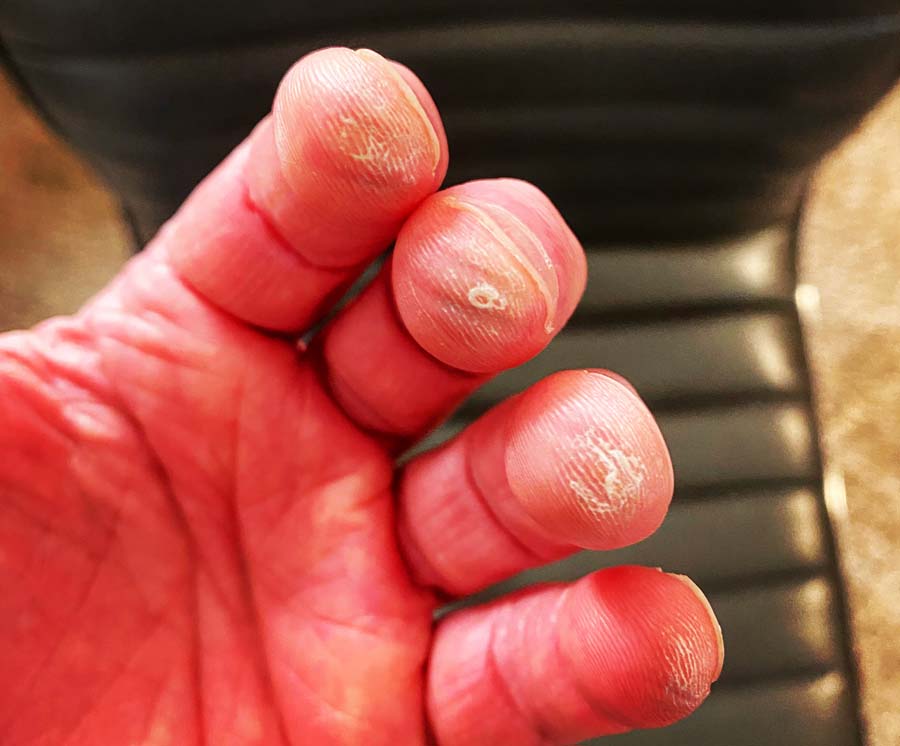
Don’t let my dilapidated fingers scare you. Results differ from person to person, and your fingers go back to normal in a day or two of not playing (again, results may vary)…
Back and shoulder pain
Proper posture (Whether seated or standing) will help with this one. However, if you let yourself get lazy (like me), you will (on occasion) experience back and shoulder pain during decently long playing periods. Leaning over the guitar for long periods, despite the fact that most guitars are not that difficult to hold and are not that heavy, can still prove exhausting and painstaking after a while.
A desire to spend more money
Like any other new toy, when you become better at using it, you’ll start to desire other versions of it, or newer (better) versions of it. Even though the beginner guitar you started out with is still just fine, you will start to notice the advantages of more expensive, better quality guitars, and begin to have ever-increasing thoughts of purchasing one of those “machines.”…
As with any other product on the market, well-built guitars have some great advantages, like:
- Having better intonation, meaning the guitar stays in better tune up and down the neck.
- Better overall tone emanates from the instrument.
- Better finish giving a better appearance. The list goes on…
A Desire to play with others
And finally, once you’ve achieved a certain level (doesn’t have to be that advanced, of course) of playing and confidence, you’ll start to wonder what it’s like to play alongside other musicians. Let me tell you, it’s fun and exhilarating. Being able to do this (sort of) signifies the fact that “now I’m a ‘real’ guitar player.”
I must admit that over time, I don’t exactly crave that feeling anymore. Don’t get me wrong, it’s a blast every time I’m able to do it. It’s just that I prefer being in a studio environment (by myself) rather than live playing events. That being said, I will NOT join another band again, but will probably NOT turn down opportunities to jam with others or to work in the studio with others…
Whenever two or more musicians get together, there’s always a learning opportunity present. I’ve acquired the musical abilities that I have from a variety of sources: Well, God, of course… Family, a week’s worth of guitar lessons (4x 30 minute sessions), books, and fellow musicians while playing together and asking each other questions like simply – “How did you play that?!”…
In Conclusion
Playing the guitar is definitely fun. It’s also quite a challenging thing to start to do – to learn. All I can say is that there are no real downsides to learning the guitar. Sure, one may experience some frustration along the way, but in the end, if you stick with it long enough, nothing but pleasure-filled moments will follow…
Until Next Time!

Stephen B. Ruppe
Would-Be Musician, Armchair Philosopher, Etc.
Visit My YouTube Channel here:
YouTube.com/@StephenRuppe